

Implant Treatment
Implant Treatment
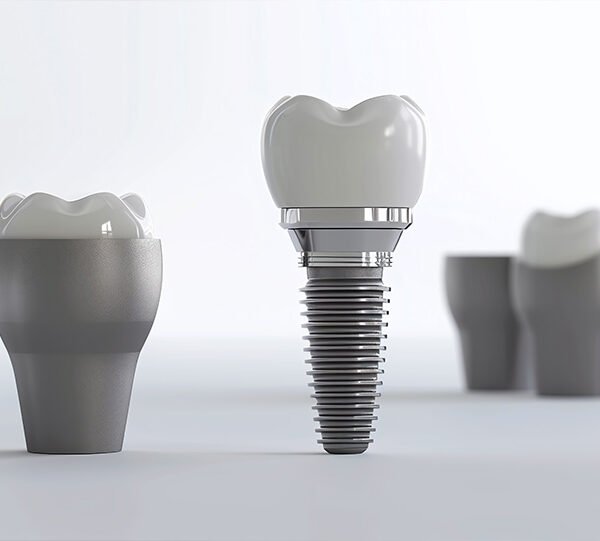
Implant Treatment Procedure
Anesthesia
Local or Sedation
Procedure Time
20-30 minutes
Stay in Istanbul
3 to 5 days
Return to Social Life
Same Day
Başlık Metninizi Buraya Ekleyin
What is Implant Treatment?
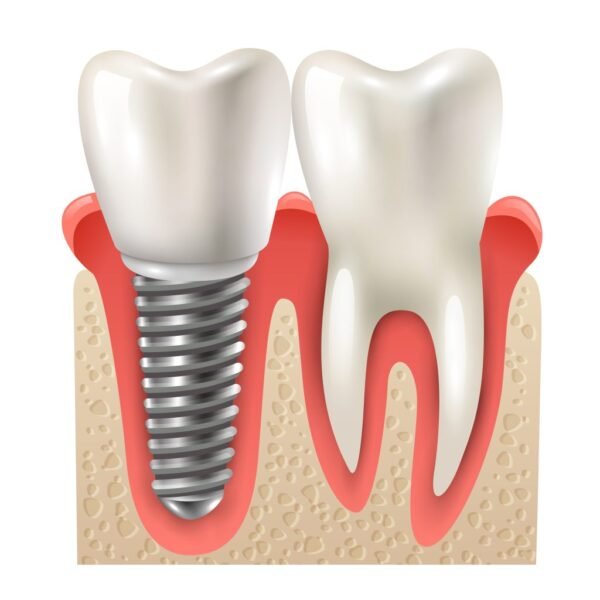
Dental implant treatment is an artificial tooth root and superstructure used to replace a missing tooth, mimicking a natural tooth. Usually made of titanium, implants are surgically placed in the jawbone and act as a natural root to meet the functional and aesthetic needs of the lost tooth.
Dental implant treatment offers the comfort and aesthetics of natural teeth while being applied without damaging neighboring teeth, unlike bridges or dentures. Due to its long lifespan and robust structure, this treatment stands out as one of the closest alternatives to natural teeth.
What are the Advantages of Implant Treatment?
Thanks to implant treatment, the use of bridge treatments, which were frequently used in the past, has rapidly decreased. Implant treatments have brought an end to the era of cutting down two adjacent teeth and using them as bridge abutments due to the loss of a single tooth. With implant treatment, a single tooth gap can be filled without damaging adjacent teeth. It is easier to maintain and clean compared to bridges. Implant treatment has the function of a natural tooth and offers the same appearance. It is almost impossible to distinguish an implant treatment from a natural tooth.
Who is a Suitable Candidate for Dental Implant Treatment?
Dental implant treatment is generally suitable for individuals with a healthy jawbone and good overall oral health. Those who have lost a single tooth but whose surrounding teeth are intact are ideal candidates for this treatment. For implant treatment, the jawbone must have sufficient thickness and height to support the implant; therefore, additional treatments may be needed in cases of insufficient bone density.
How Should Implant Treatment Be Performed?
The integrity of the implant and the prosthesis to be placed on it is very important. The design of the implant screw and the intermediate parts to be selected during the prosthesis phase are crucial for the long-term success of single implants.
The prosthetic part of the implant should not loosen and fall out.
If possible, the adhesive (cemented) method should be avoided.
If preferred, adhesive residues must be cleaned very thoroughly to avoid damaging the bone around the implant.
In patients who grind their teeth, attention should be paid to the porcelain design.
Food particles should not accumulate around the implant and between the teeth.
Can Implant Treatment Be Applied to Everyone?
For implant treatment to be applied, the person must have completed their active growth process and have sufficient bone level. Since the implant will act as a tooth root, the better the quality and strength of the bone structure surrounding the tooth, the more successful the screw will be in attaching to the bone.
What are the nutritional recommendations after implant treatment?
Following implant treatment, paying attention to dietary habits is crucial to support the healing process. For the first 24-48 hours, cold foods and drinks should be preferred to reduce pain and swelling. Soft, cold foods such as yogurt, pureed vegetables, soup, and ice cream are recommended. For the first few days, hard and chewy foods should be avoided; instead, a diet consisting of liquids and soft foods is advised.
How is sutureless implant treatment performed?
Sutureless implant treatment is a method that does not require the use of sutures during implant placement. In this method, the implant surgeon uses a special technique to place the implant directly into the gum. Sutureless implant treatment involves the following steps:
Before starting sutureless implant treatment, an oral and dental health check and examination should be performed. The dentist evaluates the patient and determines whether sutureless implant treatment is suitable. The dentist evaluates the patient’s oral health history, gum health, intraoral examination results, bone density, and other factors.
In addition to the physical examination, the jawbone should be examined in more detail. For this, radiological imaging should be performed.
The jawbone is examined in three dimensions using a computer. Information about the patient’s bone structure will be accessed.
Then, sutureless implant treatment begins under local anesthesia.
A small circular area is opened in the patient’s gum with the help of a laser.
In sutureless implant treatment, the tooth is placed in the area obtained.
Following the implant placement, a procedure is performed to prevent pain that may occur in the area where the implant will be placed.
Compared to classic implant treatment, the recovery time is shorter. The problem is treated with a minor intervention in the gum and jawbone.
Advantages of Sutureless Implant Treatment
Disadvantages of Sutureless Implant Treatment
Sutureless implant treatment has several advantages over traditional implant treatment. Some of these advantages include:
Less invasive: Sutureless implant treatment is less invasive than traditional implant treatment. Therefore, the surgical procedure may be less painful and uncomfortable.
Faster healing process: Sutureless implant treatment offers a faster healing process compared to traditional implant treatment. Swelling, pain, and discomfort may be felt in the tooth and mouth after classic implant placement. This is prevented with sutureless implant treatment.
Requires fewer visits: Sutureless implant treatment requires fewer visits than traditional implant treatment. Therefore, patients’ dental visits and treatment process may be shorter.
More natural appearance: Sutureless implant treatment can offer a more natural appearance in the area where the implant is placed. This allows patients to smile and talk comfortably with other people. Lower risk of complications: Sutureless implant treatment carries a lower risk of complications and reduces the risk of unwanted situations compared to traditional implant treatment. Especially in patients with gum disease or infection, sutureless implant treatment may be less risky.
While sutureless implant treatment offers many advantages, it also has some disadvantages. Some of these disadvantages are:
Higher cost: Sutureless implant treatment can be more expensive than traditional implant treatment. Therefore, it may be a less suitable option for some patients.
Limited applicability: Sutureless implant treatment can be a successful option in suitable patients. However, it must meet certain criteria to be applicable to every patient. Therefore, sutureless implant treatment may not be suitable for everyone.
Implant stability: Sutureless implant treatment depends on the bone density in the area where the implant is placed. In patients with insufficient bone density, implant stability problems may arise.
Dentist’s experience: Sutureless implant treatment requires a more technical procedure than traditional implant treatment. Therefore, the dentist’s experience and training are important for the success of this treatment.
Although sutureless implants have some disadvantages, they can be an advantageous option in suitable patients. It is important to consult with a dentist or implant surgeon to determine the right treatment option.
Frequently Asked Questions
Implant: Adjacent teeth are not touched at all. Only an artificial root is placed in place of the missing tooth. It prevents bone loss.
Bridge: The two healthy teeth next to the gap need to be reduced (cut). Implants are a much more conservative method as they preserve your healthy teeth.
The surgical stage (placement of the implant in the bone) usually takes 15-30 minutes. However, osseointegration (fusion of the implant with the bone) typically takes 2-4 months. After this period, a permanent porcelain tooth is placed on top.
Temporary teeth are often used, especially for missing front teeth, to minimize disruption to the patient’s social life. This way, the gap remains invisible while the implant heals.
No, nowadays implant procedures have an extremely high success rate (98%). Since they are performed under regional (local) anesthesia, no pain is felt during the procedure.
At first glance, it may seem more expensive than bridge treatment. However, with a bridge, you pay for three teeth, and it may need to be replaced every 10-15 years. Implants, on the other hand, are the most economical and permanent solution in the long run.
If there is no infection in the area and the bone structure is suitable, an implant can be placed in the same space as the tooth extraction using a method called “Immediate Implant.” This is a very advantageous method that shortens the healing time.