

Laminate Veneers
Laminate Veneers
Creating Your New Smile with Accuracy and Care
These are wafer-thin, custom-shaped veneers that are attached to the surface of the front tooth, providing a quick and versatile solution to many cosmetic dental problems. Whether it’s discoloration, chips or cracks, cavities, or even misshapen teeth, our laminate veneers offer solid and realistic solutions that can fundamentally improve your smile.
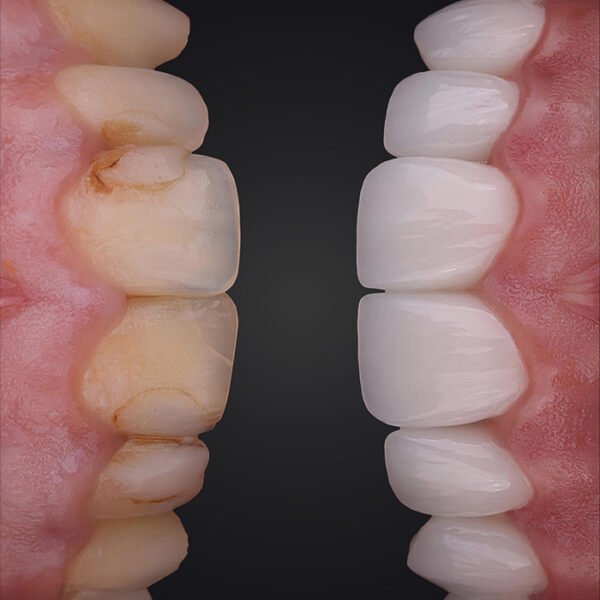
Laminate Coating Procedure
Anesthesia
local (if necessary)
Treatment Duration
1 to 2 hours
Stay in Istanbul
3 to 5 days
Return to Social Life
1 to 3 days
Başlık Metninizi Buraya Ekleyin
What is laminate veneer?
Laminate veneers are thin porcelain coatings applied to the front surface of teeth. They are preferred for aesthetic purposes, especially to correct discoloration, fractures, cracks, deformities, and gaps in teeth. Laminate veneers are applied with minimal intervention, offering an aesthetic solution without damaging the natural tooth structure. Their thin structure allows for light transmission, enabling the closest possible result to natural teeth. This treatment option can be safely applied without harming the teeth, making patients’ smiles more attractive.
What should I consider before getting laminate veneers?
Before getting laminate veneers, it’s important to have a thorough examination with your dentist. The health of your teeth, your aesthetic needs, and your expectations should be assessed. You should also consider factors such as the quality of the materials to be used and the dentist’s experience. Open communication with your dentist before the procedure will help you better understand the treatment process and clarify your expectations.
Laminate Veneer Trends and Innovations in 2025
2025 marked a period of digitalization and personalized solutions in aesthetic dentistry. Laminate veneer applications were directly impacted by these developments. Now, veneers not only correct tooth aesthetics but are also designed specifically to the patient’s facial proportions, smile line, and personal preferences.
One of the prominent trends this year was “ultra-thin porcelain veneers.” These new generation veneers, requiring almost no abrasion on the tooth surface, provide both aesthetic and biological advantages by maximizing tooth tissue preservation. Furthermore, their light transmittance is perfectly matched to natural teeth, preventing an artificial appearance.
Digital smile design has become standard. Thanks to AI-powered simulations, patients can see the finished veneers digitally before the procedure begins. This significantly increases patient satisfaction.
Another innovation is biocompatible material technologies. Nano-ceramic veneers developed in 2025 offer better gum compatibility and longer-lasting color stability.
In summary; By 2025, laminate veneers will no longer be merely an aesthetic procedure, but a high-tech process combining digital planning, facial aesthetic analysis, and biocompatible materials.
How is Laminate Veneer Application Performed?
Laminate veneer application generally consists of several stages. First, your needs are determined through an assessment with your dentist.
Then, the surface of the teeth is prepared with a thin layer; this stage is minimally invasive to preserve the natural structure of the teeth. In the next step, laminate veneers, specially produced in a laboratory, are bonded to your teeth. This process usually requires two or three appointments, and may vary depending on the dentist.
How Long Does Laminate Veneer Procedure Take?
Laminate veneer procedure usually requires two or three appointments. In the first appointment, your teeth are examined and necessary measurements are taken. In the second appointment, minimal preparation is done on the surface of your teeth, and the laminate veneers are sent to the laboratory for production.
Finally, in the third appointment, the ready veneers are placed on your teeth. The entire process is usually completed within 1-2 weeks.

What are the advantages of getting laminate veneers?
There are many advantages to getting laminate veneers. Firstly, they are one of the closest aesthetic solutions to the natural appearance of teeth because their thin structure allows light to pass through and provides a shine similar to natural teeth. Furthermore, the minimal intervention to the tooth tissue allows for significant preservation of the teeth. The durability of this procedure is another important advantage.
Laminate veneers maintain their aesthetic appearance and functionality for many years. Thanks to their resistance to discoloration, they remain white despite daily consumption habits such as coffee, tea, and smoking. Additionally, laminate veneers significantly improve a person’s smile aesthetically and have a confidence-boosting effect.
Digital Smile Design with Laminate Veneers: A New Era
By 2025, smile design no longer simply means “beautiful-looking teeth.” Personalized smile planning, tailored to each individual’s facial structure, lip shape, and expressions through digital analysis, is now paramount. Laminate veneers are an indispensable part of this design.
The digital smile design process begins with 3D intraoral scans and facial proportion analysis. Factors considered include not only the patient’s teeth but also lip contour, the distance between the nose and lips, and the visibility of teeth during a smile. Then, the shape, size, and color of the laminate veneers are designed on a digital model created on a computer.
Thanks to newly developed CAD/CAM technologies, this digital planning is directly transferred to production. The dentist and patient can make changes to the simulations if necessary. This allows for a clear view of the outcome before the procedure begins.
This method guarantees both the aesthetic integrity and functional compatibility of the veneers. By 2025, digital smile design and laminate veneers have become two inseparable components.
Who is suitable for laminate veneer treatment?
Laminate veneer treatment offers a suitable option for individuals with various dental aesthetic problems. Below are some points regarding who this treatment is suitable for:
- Those with Discoloration: Individuals with permanent stains or yellowing on their teeth that cannot be removed by whitening methods.
- Those with Irregular Teeth: Individuals with mild crowding or irregularities in their teeth can achieve a more symmetrical appearance with laminate veneers.
- Those with Minor Cracks and Wear: Individuals with superficial cracks or wear on their teeth can choose laminate veneers to cover these problems.
- Gaps Problems: It is a suitable solution for individuals who want to aesthetically close the gaps between their teeth.
- Tooth Volume Loss: Individuals who experience volume loss in their teeth or have thin teeth can make their teeth look fuller with veneer application.
- Those Who Want to Improve Dental Aesthetics: It offers an ideal option for everyone who wants to improve smile design and dental aesthetics in general.
What changes can be made to my teeth with laminate veneers?
With laminate veneers, various changes can be made to your teeth. Significant improvements can be achieved in aesthetic aspects such as color, shape, size, and surface roughness.
In particular, dark teeth can be lightened, irregular teeth can be made more symmetrical, and gaps can be closed. Additionally, small cracks or wear on the teeth can be concealed, resulting in a more natural look.
What Aesthetic Problems Do Laminate Veneers Solve in Teeth?
Laminate veneers offer solutions to a range of aesthetic dental problems. Discoloration and staining of teeth are among the most frequently treated issues. In addition, mild misalignment, small gaps (diastema), or excessive tooth wear can also be corrected with laminate veneers.
Aesthetic defects such as tooth deformities, disproportionate appearance, or chipping are also corrected with this method. Significantly improving smile aesthetics, laminate veneers provide both a natural and even tooth alignment, positively impacting a person’s overall appearance.
What is the Difference Between Laminate Veneers and Dental Crowns?
These features reveal functional and aesthetic differences between laminate veneers and dental crowns, determining the most suitable treatment option according to the patient’s needs.
Application Area: Laminate veneers are applied only to the front surface of the teeth and are primarily used for aesthetic purposes. Dental crowns, on the other hand, cover the entire tooth and are generally preferred for more serious damage. Removal Rate: In laminate veneers, very little or no removal is required from the tooth surface. In dental crowns, a larger portion of the tooth is removed because the crown is made to cover the entire surface of the tooth.
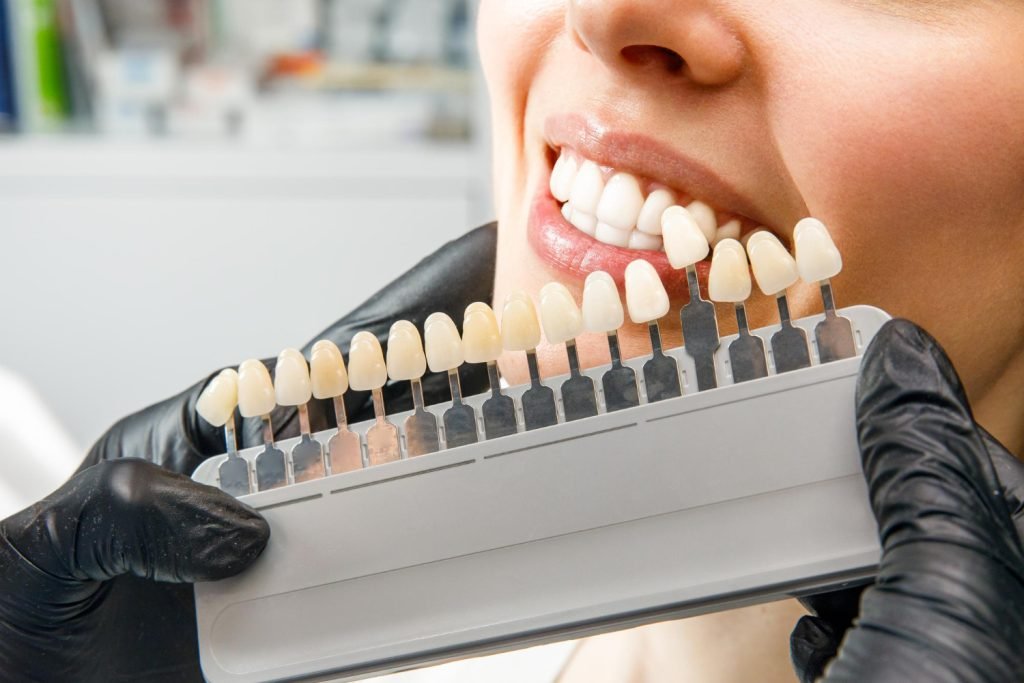
- Purpose of Use: Laminate veneers are used to correct milder aesthetic issues such as discoloration, small gaps, slight misalignment, and deformities in teeth. Dental crowns, on the other hand, are preferred for teeth that are fractured, excessively worn, or have large fillings, or when the tooth needs strengthening.
- Natural Appearance: Because laminate veneers have a thin structure, they offer an appearance close to the natural light transmission of the tooth, and therefore provide the closest results to the appearance of natural teeth. Dental crowns, being thicker, may not offer as fine detail as laminate veneers, despite their natural aesthetic appearance.
- Durability: Although both applications are durable, dental crowns may have a longer lifespan structurally because they provide more comprehensive protection. While laminate veneers are resistant to daily wear and tear and impacts, they are not as strong as crowns.
What kind of care should be given to teeth after laminate veneer treatment?
To ensure the longevity and aesthetic appearance of your laminate veneers, there are several important care steps to take. First, maintaining good oral hygiene is crucial. You should brush your teeth at least twice a day with a soft toothbrush and fluoride toothpaste. Flossing is also essential for removing plaque between your teeth. To avoid damaging the surface of the laminate veneers, you should avoid abrasive toothpastes and brushes with hard bristles.
Furthermore, be mindful of consuming beverages that can stain teeth, such as coffee, tea, and red wine, and rinse your mouth afterward. To prolong the life of your veneers, avoid cracking hard foods with your teeth or straining them with habits like nail biting or pen chewing. Regular dental checkups and professional teeth cleaning also help keep your veneers healthy and detect potential problems early.
Frequently Asked Questions
Laminate veneers are thin, semi-transparent porcelain layers applied to the front surface of a tooth. They are one of the most preferred methods in aesthetic dentistry in 2025. They are an ideal solution for individuals with discoloration, deformities, gaps, or minor fractures in their teeth. They are particularly preferred by adults with mild irregularities that do not require orthodontic treatment.
The application process is usually completed within 7 to 10 days. In the first session, minimal correction is made to the front surface of the teeth and impressions are taken. Digital images of the teeth are taken, and custom veneers are designed to suit the patient’s face shape and smile line. In the final session, the veneers are permanently fixed to the teeth with special adhesives. Thanks to modern technologies, the procedure is both comfortable and fast.
With proper care, laminate veneers can last up to 15 years. To ensure their longevity, you should brush your teeth at least twice a day, use dental floss or interdental brushes, and have check-ups with your dentist twice a year. Avoiding habits such as breaking hard foods with your teeth and teeth grinding (bruxism) at night will also prolong the life of the veneers.
Avoiding very hot and very cold foods in the first 48 hours is important to prevent sensitivity. After the veneers are placed, the person can eat normally. However, habits such as nail biting, chewing on pens, and cracking hard-shelled foods with the teeth should be stopped. Although laminate veneers are produced to closely resemble natural teeth, they are vulnerable to excessive forces.
Digital smile design, CAD/CAM systems, and 3D mouth scanning technologies now allow for more precise and faster, personalized laminate veneers. These technologies not only provide a more natural aesthetic appearance but also enable patients to see the final result through simulation before the veneer procedure begins.
These two treatments address different needs. Laminate veneers are more often recommended for individuals with strong tooth structure and a focus on aesthetics. Zirconium, on the other hand, is preferred for more significant structural problems or for back teeth due to its greater durability. Both treatments have advanced considerably by 2025, but a specialist dentist should determine which is most suitable after a thorough examination.
Laminate veneers are made to match the existing color of the tooth. If the patient has discoloration in the teeth that will not be veneered and a lighter shade of laminate is preferred, teeth whitening is recommended before the procedure. This makes the laminates look more natural and ensures color harmony among all teeth.