

Root Canal Treatment
Root Canal Treatment
We are one of the best specialists to offer you up-to-date treatments for preserving your root canals, saving damaged or infected teeth. The expert dental care professionals at the clinic use the latest technologies and techniques in treatment to make it as painless as possible while keeping your smile natural.
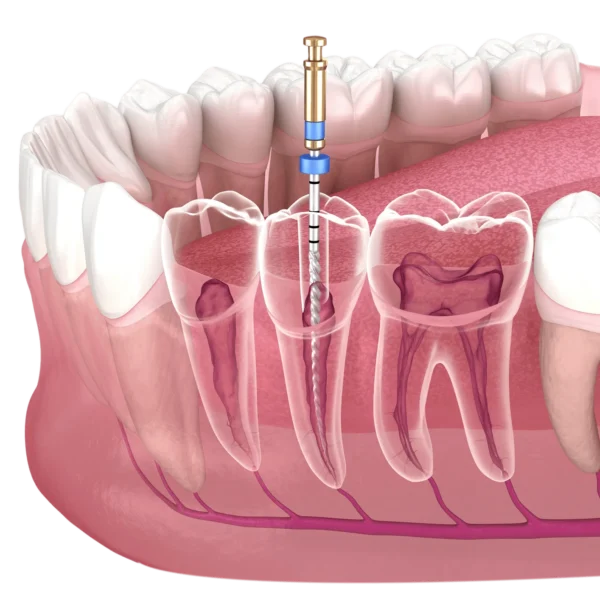
Endodontic treatment is the treatment of infection or other damage to the tooth pulp. This is the soft tissue inside the tooth that contains blood vessels and nerves. The infected tissue must be removed. The inside of the tooth needs to be cleaned and disinfected, and if it has become infected or inflamed due to decay, injury, or other reasons, it must be sealed to prevent further infection.
Root Canal Treatment Procedure
Anestezi
Local
Procedure Time
1 to 2 Hours
Stay in Istanbul
1 to 2 Days
Return to Social Life
1 Day
Başlık Metninizi Buraya Ekleyin
What is root canal treatment?
Endodontic treatment, or root canal treatment, is the process of removing the pulp tissue that has become inflamed or infected by microorganisms, cleaning and shaping the root canal space, and filling it with biocompatible root canal filling materials. This entire process is defined as root canal treatment. Root canal treatment is a method applied when the tooth root is affected by decay or various traumas. The aim is to prevent tooth loss and ensure that the tooth remains active in the jawbone, performing its normal functions.
How is root canal treatment performed?
In root canal treatment, a hole is drilled in the tooth to reach the root, and the nerves, blood vessels, and tissues in that area are removed. The pulp and canals are then cleaned and disinfected, and the removed pulp is refilled with dental material.
This process can take longer depending on the extent of the infection in the tooth. Temporary fillings are used until the infection in the tooth is treated. Each tooth contains a different number of canals. When decay reaches the pulp, all canals in the tooth must be treated. Incisors, located in the front of the mouth, usually have one canal, premolars have two canals, and molars may have three or four canals. The number of canals in a tooth can vary from person to person. Each root can be considered as one canal, but sometimes there may be extra canals.
Who is a candidate for root canal treatment?
Root canal treatment is necessary when the pulp tissue inside the tooth becomes inflamed or infected. Here are some situations where root canal treatment is needed:
Cavity Problems: Deep cavities can reach the inside of the tooth, leading to inflammation or infection of the nerves. In these cases, root canal treatment is recommended.
Dental Trauma: Damage resulting from teeth falling or being struck can increase the risk of infection in the root canals. Such situations may require root canal treatment.
Tooth Fractures: In fractured teeth, especially if there is damage to the root portion, root canal treatment may be necessary.
Age Group: While root canal treatment is commonly performed in adults whose tooth development is complete, it can also be used in children in some cases. However, it is important to consider the tooth development of children.
Preventing Tooth Loss: Eliminating infection or inflammation in the root canals of the tooth is a critical step in preventing tooth loss. Therefore, your dentist will create a treatment plan suitable for your situation.
How long does it take to heal after root canal treatment?
If your root canal-treated tooth becomes infected, the healing process can take anywhere from 6 to 24 months. This doesn’t mean you’ll always be in pain during this time. Rather, it’s the time it takes for your body to rid itself of the infection and replace it with healthy tissue.
If the infection hasn’t spread to your tooth, it takes between one and three weeks for a root canal to heal completely. The inner canals of this tooth may be infected, but the surrounding tissues are not yet infected. However, it’s important to note that the surrounding tissues will be very susceptible to infection later on.
Things to Consider After Root Canal Treatment
While teeth gradually heal after root canal treatment, there are some things to keep in mind:
Avoid biting into hard or crusty foods until the root canal treatment is complete.
It is important to continue daily dental cleaning without interruption. Considering the sensitivity of the teeth, brushing should be done gently and in circular motions at least twice a day. Not neglecting daily dental cleaning is essential for both general oral health and post-root canal treatment recovery.
- To prevent possible infections after root canal treatment, it is necessary to use dental floss at least once a day. Flossing is also very important for oral health. When starting to use dental floss, you can benefit from your dentist’s recommendations suitable for your teeth and oral structure. It is recommended to reduce the consumption of sugary and sticky foods for a while after treatment. Sugars are one of the most important causes of tooth decay. Sugar consumption should be limited for both overall body and oral health. Sugar is not only found in products like wafers and chocolates; it is also present in many packaged products and beverages. Pain relievers or medications recommended by your dentist should be used regularly after root canal treatment. If the pain relievers or medications do not reduce the pain, you can consult your dentist as soon as possible.
Frequently Asked Questions
Treatment duration varies depending on the number of root canals and the severity of the infection. Generally, a session lasts between 45 and 90 minutes. If there is active inflammation or an abscess in the tooth, medication may need to be placed in the root canals and a few days may be required; in this case, treatment may be completed in 2-3 sessions.
No. Thanks to advanced local anesthesia techniques, you won’t feel any pain during the procedure. The process feels similar to a standard filler injection.
It is normal to experience slight tenderness (especially when pressure is applied) during the first few days after treatment, as it takes time for the tissues at the root tip to heal. However, pain that begins months later may indicate a leakage of the filling, the formation of new decay, or a recurrence of inflammation at the root tip.
During root canal treatment, the nerves that keep the tooth alive are completely removed, so the tooth can no longer respond to external stimuli such as hot or cold. This is inherent to the nature of the treatment.
The success rate is around 90-95% when the correct technique is used. If a good restoration (crown or porcelain filling) is applied after treatment and oral hygiene is maintained, these teeth can last a lifetime.